
.png)
Title:
Volt Solar Tiles vs Tesla Solar Roof: What Works in Australia
Writer:
Natassja Lindrea
Category:
Integrated Solar
Date
April 8, 2026

April 8, 2026
ARTICLE
Volt Solar Tiles vs Tesla Solar Roof: What Works in Australia
Volt solar tiles bring integrated solar into a more relevant Australian context. While Tesla remains part of the comparison, the real value here is in focusing on what actually matters: availability, roofing compatibility, local conditions and long term performance.
A roof should do more than protect a home from the elements. It should preserve its architectural intent and increasingly, contribute to how that home is powered.
For decades, solar has been treated as an addition. Panels are installed after the roof is complete, sitting above it as a separate system. Effective, but visually and structurally distinct.
That approach is starting to shift.
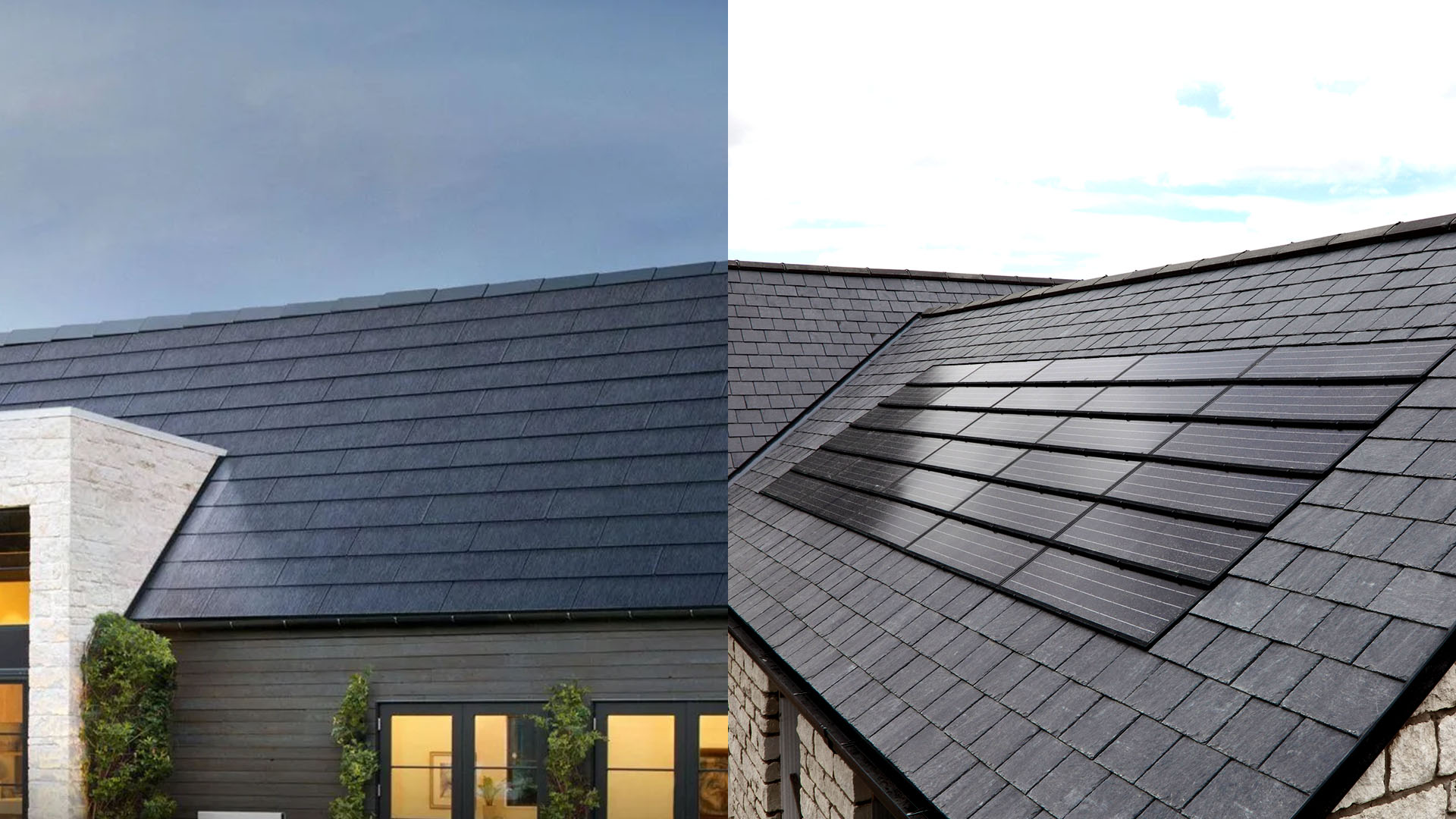
Tesla Solar Roof has helped make that idea widely recognised, while Volt solar tiles bring it into the context of Australian tiled roofing. That is what sits behind the comparison of Tesla Solar Roof vs Volt Tile: not just two products in the same category, but two different expressions of how solar can become part of the roof itself.
What an Integrated Solar Roof Actually Is
An integrated solar roof replaces selected roofing materials with photovoltaic tiles that generate electricity while performing as part of the roof.
There is no secondary layer. No visible racking or panels sitting above the surface. The roof reads as one continuous system.
Volt follows this approach through building integrated photovoltaics designed specifically for tiled roofs. Rather than adapting a finished roof to accommodate solar, the system is installed during the roofing process itself. The result is a single roofline, where architecture and energy are considered together.
Unlike traditional solar, this approach removes the need for mounting systems, brackets or roof penetrations. The solar element is part of the roof itself, not fixed through it.
This idea is not limited to Australia. Globally, it has become widely recognised through products like the Tesla Solar Roof.
Tesla Solar Roof: The Global Reference Point
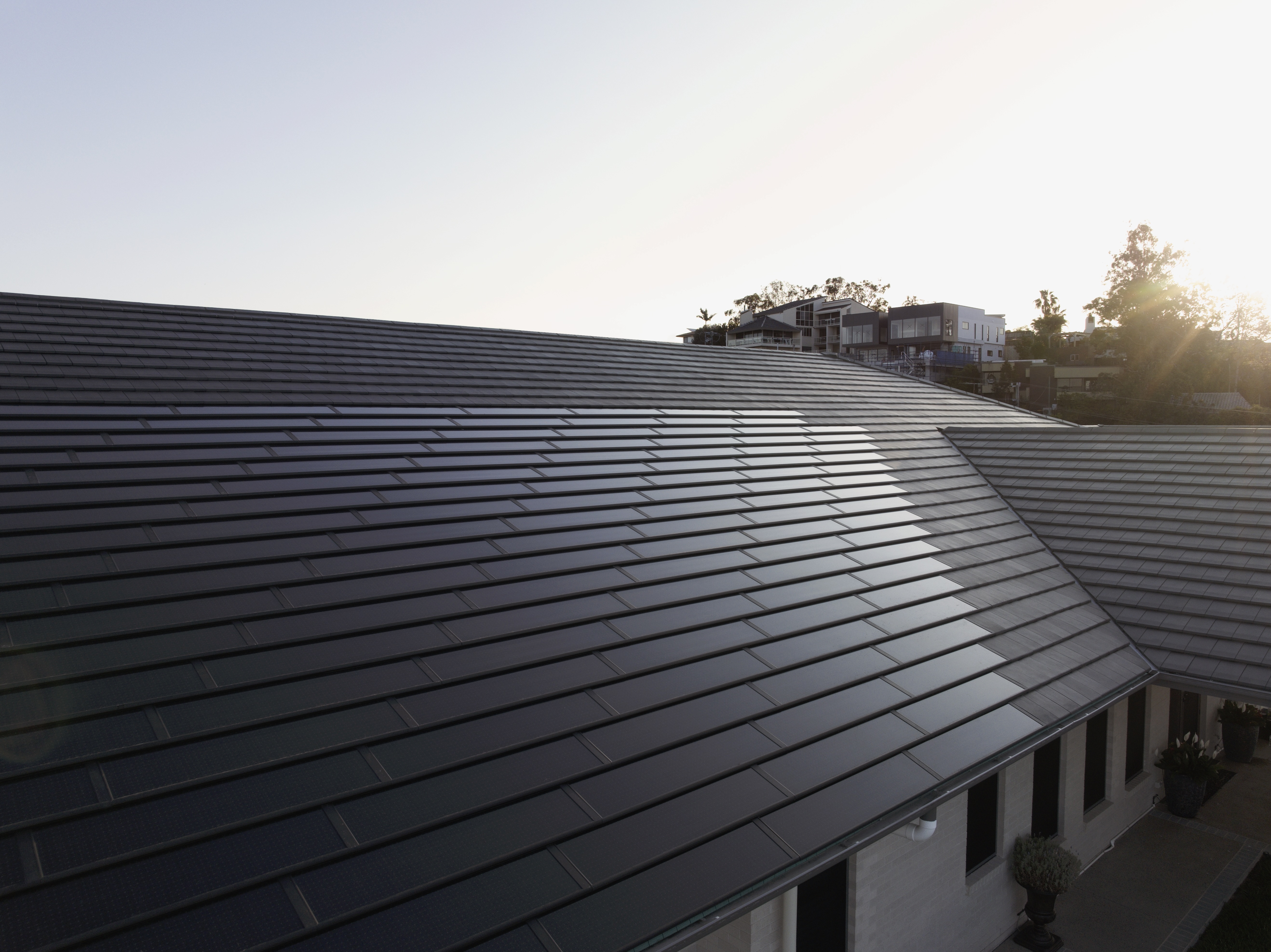
Tesla Solar Roof has played a defining role in bringing this category into public awareness.
For many homeowners, it is the first time the idea of an integrated solar roof becomes visible. The concept of generating energy without introducing a separate layer of hardware has shifted expectations around what a roof can be.
As a result, Tesla solar tiles often become the starting point for research in this space.
That awareness is significant. But whether that concept can be realised within Australian construction conditions is a different question.
Tesla Solar Roof vs Volt Solar Tiles: Key Differences in Australia
For Australian homeowners exploring integrated solar roofing, the comparison between Tesla solar tiles and Volt solar tiles is less about brand preference and more about context.
Availability in Australia
Tesla Solar Roof is not currently available, certified, or installed in Australia.
Volt solar tiles are available and designed for local projects, working within Australian construction standards and roofing practices.
This is often the first and most practical distinction. A system can only be considered if it can be specified and installed within the local building environment.
System Context
Both Tesla Solar Roof and Volt solar tiles sit within the same category. They aim to integrate solar generation into the roof itself rather than adding it later.
The difference lies in how that integration is resolved.
Volt is designed specifically for tiled roofing systems commonly used across Australia. It works within established roof profiles and material expectations, allowing the system to sit naturally within residential construction.
This includes compatibility with premium tiled systems such as Bristile profiles, allowing Volt to integrate into roofing specifications already widely used across Australian homes.
Engineering Context
Tesla is a globally recognised product developed for multiple markets.
Volt is designed and engineered in Australia, where roofs are exposed to intense UV, high temperatures, heavy rain and strong wind conditions.
This influences how the system is built. Material selection, structural framing and water management are not abstract considerations. They are responses to the environment the roof must perform in over time.
Installation Logic
Volt installs as part of the roofing process.
Solar tiles replace standard tiles in selected areas, integrating into the roof during construction or reroofing. There is no secondary system installed after the roof is complete.
This maintains the idea of one roof, not a finished roof with energy hardware added later.Installation is coordinated across roofing and solar trades, ensuring the system is delivered as a single workflow rather than two disconnected stages.

Why Australian Conditions Change the Conversation
A roof in Australia carries a different set of demands than in many other parts of the world.
Heat and UV exposure accelerate material fatigue. Heavy rain tests water management systems. Wind uplift places structural stress on roofing assemblies. Over time, these forces define how well a roof performs.
Solar roofing must operate within this reality.
It is not only a question of energy generation. It is a question of whether the system can manage water, movement and exposure over decades.
This is why integrated solar cannot be treated purely as a product. It must be considered as part of the roof system itself.
Volt Solar Tiles: Designed for Local Roof Systems
Volt solar tiles are built around this understanding of the roof as a complete system.
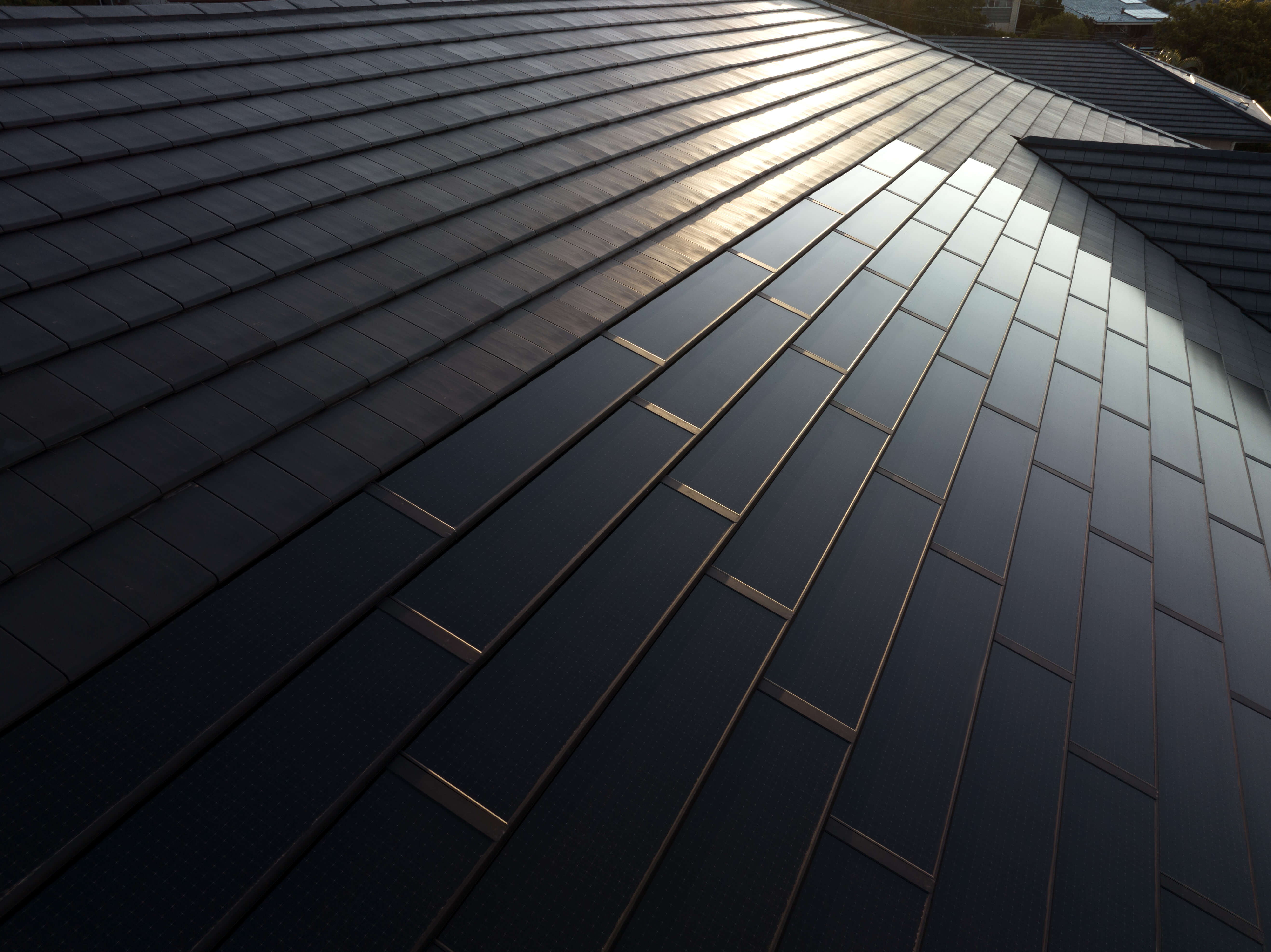
The product range includes Planum for terracotta profiles and Lodge for concrete profiles, allowing the system to integrate with premium tiled roofing commonly used in Australian homes.
Each tile combines photovoltaic generation with roofing function.
Key design features include:
- aluminium framing for structural integrity and corrosion resistance
- tempered glass to protect the photovoltaic layer in demanding environmental conditions
- defined interlocks and watercourses that create controlled drainage pathways across the roof
- raised framed edges that help channel water and maintain consistent separation between tiles
- concealed cabling to maintain a clean roofline
Because the system is installed within a pitched tiled roof, these design elements help guide water down and across the roof in a controlled and predictable way. Rather than relying on surface sealing alone, the framed tile system manages drainage more like a traditional tiled roof, supporting long term weather performance and serviceability.
Installation occurs within the roofing workflow, coordinated alongside roofing and solar trades. The outcome is not a roof plus solar, but a single, cohesive system designed to perform both roles.
Volt as a Tesla Solar Roof Alternative in Australia
For Australian homeowners researching Tesla solar tiles, the practical question is not only what Tesla represents globally. It is what integrated solar roof option is actually available and relevant locally.
That is where Volt becomes a strong Tesla solar roof alternative.
Tesla Solar Roof has helped define the category globally, but it is not currently available or installed within Australia due to not meeting Australian regulatory requirements.
Volt works within the realities of Australian tiled roofing, local climate conditions, and installation requirements. It is designed as part of the roof system itself, not as a mounted layer added later. For projects where architectural consistency matters, and where the roof needs to perform under Australian conditions, that local engineering context matters.
In that sense, Volt is not simply an alternative to Tesla because Tesla is unavailable here. It is an integrated solar roofing system developed for the conditions this market actually builds in.
The Direction of Roofing
Tesla Solar Roof has helped define what many people now expect from solar. A roof that generates energy without disrupting the architecture.
That expectation is unlikely to reverse.
But roofs are not universal products. They are shaped by climate, materials and construction methods that vary by region.
The future roof will generate energy. The difference lies in how well that system is designed for where it is built.
Explore integrated solar for your project
See how Volt solar tiles offer a practical integrated solar roofing solution for Australian homes. Explore a system designed to work with local tiled roofs, conditions and construction requirements.
Natassja Lindrea is the marketing and brand lead at Volt Solar Tiles, working at the intersection of design, construction, and energy. With a background spanning marketing, storytelling, and the built environment, her work focuses on translating complex technical ideas into clear, grounded insights for Australian homes. She writes about building-integrated solar, architectural decision-making, and why context matters when designing for local conditions.
.png)
Written By
